Advanced Business English Idioms to Use Instead of “Very”
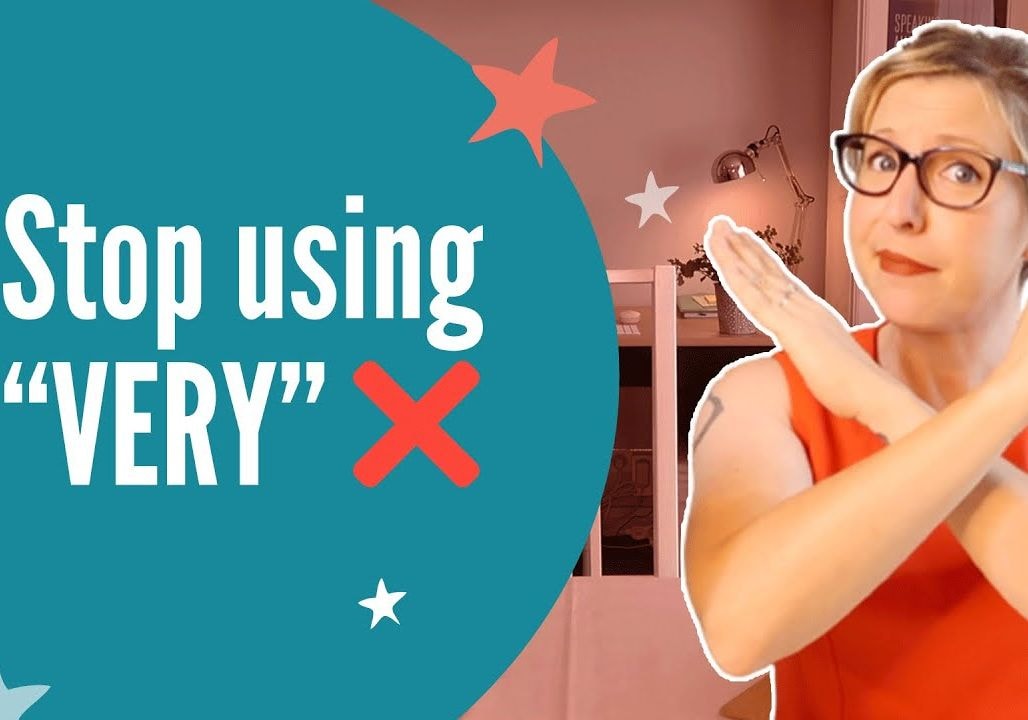
For More Advanced Business English, Stop Saying “Very” and Use These Expressions Instead
Very interesting. Very good. Very bad. Very difficult…
Do you use “very” too much when you speak English?
If you’re like many of my students, once you start noticing how often you use the word “very.” You might realize it comes into your conversation often. And that it makes your English feel a bit basic.
If you feel like you use “very” too much when you speak English, don’t worry. We all do!
Even native speakers have to go beyond “very” and learn to use other words so they can sound more sophisticated.
This is especially true as we move into more professional settings.
I know you’d like your English to fit your career and your professional needs. So you may want to find some other expressions to use instead of “very.”
This lesson is just for you.
You can start using these 6 new expressions today.
Why only 6 expressions?
When I came to France, I realized what a big job it is to finally start feeling advanced in a language. Sometimes, it can feel like you’ll never get there.
Especially if you start with a big, scary, frustrating list of expressions.
You end up staring at that list, not getting anywhere. Or worse, avoiding it. And in the end, you learn nothing. And you feel discouraged.
But, what I learned on my journey to sounding fluent and professional is that you have to:
- choose something important–that will change the way you speak now,
- take a step that’s so small you literally cannot fail,
- succeed
- repeat!
I know from experience that if you learn these 6 expressions you will immediately start sounding more professional and advanced in your Business English.
AND I know that by focusing on 6, you can learn one each day this week. You’ll have the time to get it done and the satisfaction of seeing you can do it.
Small improvements lead to big changes. In your English and your life.
Let’s get started!
Index:
1. For More Advanced Business English–instead of “very easy” say “a piece of cake”
2. For More Advanced Business English–instead of “very easy” say “essential”
3. For More Advanced Business English–instead of “very good” say “awesome”
4. For More Advanced Business English–instead of “very interesting” say “fascinating”
5. For More Advanced Business English–instead of “very bad” say “terrible”
6. For More Advanced Business English–instead of “very happy” say “thrilled”
#1 For More Advanced Business English, instead of “very easy” say “a piece of cake.”
You might be tempted to say something is very easy. But what if it was…
a piece of cake!
This is an idiomatic expression native speakers use all the time. It means that it’s easy to do something.
For example, you might say:
- The coffee machine was broken, but I fixed it. It was a piece of cake!
- That presentation was a piece of cake!
#2 For More Advanced Business English, instead of “very easy” say “essential.”
How often do you use this one? Probably a lot. Because some things are…very important!
But you can use a much better word: “essential.”
For example, you might say:
- It’s essential that you take breaks during your day, so you can stay focused.
- This is an essential part of the project, so please do your best on it.
#3 For More Advanced Business English–instead of “very good” say “awesome”
On our team here at Speak English with Christina, we use this one a lot!
I searched for the word “awesome” in our chat tool and found many results.
For example, you might say…
- “That’s an awesome idea, Karyn, thanks!”
- “Awesome! Glad you liked it…”
- “We had some awesome feedback from the client. They were really happy with our product.”
Try it out. It sounds warm, it sounds enthusiastic.
It sounds more advanced than…very good.
And we native speakers use it…all the time.
#4 For More Advanced Business English–instead of “very interesting” say “fascinating”
People will pay more attention to you if you stop using “very interesting” and instead say…
Fascinating!
That’s a word that catches your attention. It makes you want to know more.
For example, you might say:
- Sophie, your presentation was fascinating, really.
- I read a fascinating report about the relationship between English level and salary level.
Also check out my lesson: 5 Phrasal verbs in English.
#5 For More Advanced Business English–instead of “very bad” say “terrible”
Very bad sounds so basic and boring.
Try using “terrible” instead.
For example, you might say:
- “The movie was terrible, don’t waste your time watching it.”
- “We had terrible results last month, but this month should be better.”
But be careful! In French, for example, “terrible” can also mean good…or great.
In English “terrible” is never good. It always means something is bad.
So if you say:
“The movie was terrible, you really must see it.”
People think something’s not right with your English, or not right with you!
#6 For More Advanced Business English–instead of “very happy” say “thrilled”
Very happy is so basic that it might not show how you’re really feeling.
But when you’re thrilled…Well, that sounds sophisticated and authentic.
For example, you might say…
- “I’m thrilled that you’re investing in yourself, to become better.”
- “I’m thrilled with the work you did on this project. Thank you so much.”
Also check out my lesson: Let’s touch base: a Business English expression you can use.
If you don’t use it, you lose it. So here’s how you can use what you learned today!
The best way to become more confident using Business English is to practice! So don’t just read these expressions. Start using them today.
Here’s your weekly challenge for this week:
1.Tell me which one of these new vocabulary words you want to use more in your English.
2.Use it in an example sentence that you could use in your life.
If you learned something from this lesson, please share it with your coworkers & friends. You can send your message to them in English for more practice!
Click here to share this article on LinkedIn
Click here to share this article on Facebook
Become more fluent & comfortable in conversations
If you would like to take the next step with me, discover my Faster Fluency Conversation Club Membership Program!It helps you become more confident speaking in conversations, and get a lot more vocabulary on many different topics! And it’s a fabulous community of “English buddies” from around the world!
TIP: Use the code FFCC40 to save -40% off your 1st month of membership!
More details at https://christinarebuffetcourses.com/faster-fluency-conversation-club/join-now
Can’t wait to see you in the Club,
Christina
6 Comments

georges Siffredi says:
Hi Christina
It was a fascinating podcast, I got thrilled watching it. It’s essential to stop using “very” too much. Awesome your explanation. A piece of cake!!!
See you on Wednesday
Georges

Marcos Rodrigues Bio says:
Hi, Christina
I’m grateful for your lessons: they are awesome and fascinating too. Nevertheless, English isn’t a piece of cake.
Thank you (well, can I say “very much” only one time?
Marcos

Christina Rebuffet says:
Hi Marcos, and you are very welcome! I understand that learning English is not a piece of cake (You used that idiom perfectly!) but it looks like you’re doing some good work! And yes, you can definitely say “thank you very much!” It’s very kind of you!

EL Hadji says:
Hello Christina!
What an awesome lesson!
I’m thrilled with it because it is essential to English learners to be more fluent.
Congratulations!

Peter says:
Hello Christiana!
I’m thrilled with the way you put together this awesome lesson for us. Learning English as a non-native English native is not as piece of cake as one would think.
Peter says:
Hello Christiana!
I’m thrilled with the way you put together this awesome lesson for us. Learning English as a non-native English Speaker is not as a piece of cake as one would think.
Leave a Reply

Business English lessons & tips

Improve faster and feel more confident with my free English lessons. Sign up today.
MOST RECENT EPISODES