How to complain politely in English
How to complain politely
Hi there! I’m your English coach Christina, welcome to Speak English with Christina, where you’ll learn about American culture and business know-how to become confident in English.
Whether you are at a restaurant, at the airport, or checking into a hotel, it’s likely there will be a misunderstanding at some point. Misunderstandings happen to everyone, no matter the language.
However if you’re a visitor traveling to the United States and practicing your American English, a misunderstanding can be more frustrating than usual.
When something goes wrong or a situation doesn’t meet your expectations – especially because someone else made a mistake- it’s natural to feel angry and complain.
However, if you want to turn the situation around for a positive experience you need to knowhow to be polite in English.
Why?
Because as our parents taught us, you can catch more flies with honey. This goes for American flies as well! In this episode, you’ll learn how to complain politely in American English.
Let’s go!
Practice speaking English, to use what you learn in each episode
It’s great that you learn by watching my episodes. And you’ll learn even faster by practicing what you learn in real conversations in English.
In my Faster Fluency Conversation Club, motivated students meet four times a week with one of my expert English fluency trainers to practice speaking English in small groups, with motivated members of the Speak English Community.
Each class is focused on a theme. Prior to the class, you receive vocabulary and grammar that has to do with the theme so you can practice using new vocabulary and grammar structures in real conversations.
You even get episodes of our Fluency Club Podcast, to understand native speakers who speak fast!
The Faster Fluency Conversation Club is a fantastic way to gain fluency faster, while having a lot of fun! Do you want to join us? Click here for all the details (and to save -40% off your first month of membership!)
The Art of Complaining in American English
When you express anger and complain, people can become defensive. They may not listen to you and insist that they are right.
Try this instead: take a deep breath and prepare a polite complaint in American English.
I’ll introduce a few phrases you can use for common mishaps at a restaurant or hotel, but first let’s go over key vocabulary and phrases you can use.
Get their attention
The first step in your polite complaint is to get attention. The best way to go about this is to start with a gentle attention-getter.
For example you can start your complaint with:
“Excuse me…”
“Pardon me…”
“Excuse me” and “Pardon me” are polite ways to start a sentence when you need to get someone’s attention.
You can also start with an apology, such as “Sorry” – it sounds a bit strange, I know. After all, YOU are the person with a complaint, so why should YOU apologize?
Apologizing to get someone’s attention is very common. We use it all the time because it works. For example:
“Sorry to bother you but…”
“I’m sorry to have to say this, but…”
Disagreeing Politely
There’s no turning back now. You are ready to continue the sentence and express your opinion that there is a problem.
For example, after you get the person’s attention you can say:
“I’m afraid there’s a problem…”
“I’d like to make a complaint about…”
“Perhaps there was a misunderstanding but…”
or more formally: “I’d like to report an issue with…”
It also helps to repeat what your colleague said, so that they know you are listening, for example:
“I know this isn’t your fault, but…”
This is a good one with servers in restaurants, when your food is cold, you meat isn’t cooked correctly, or they forgot to add that extra cheese you asked for.
OK, so we’ve gotten attention and prepared our listener that there is a disagreement. Next, let’s make the complaint.
Make the Complaint…finally!
At this point you have your listener’s attention and they know you have a complaint.
And they are shaking in their boots because the USA is a service-based economy, where the customer is king, the customer is always right, and probably most importantly… the customer pays the tip.
So now you state your complaint. It’s that simple. Well… you did already get their attention and apologize for having to complain. So now, you just state the problem.
A complaint may sound like these examples:
“Excuse me, I know this isn’t your fault, but I ordered my steak well-done, and it’s not cooked enough.” “Sorry to bother you, but I’d like to make a complaint about a rude employee. I asked 3 times for some help, he looked at me, and just walked away” “I’m sorry, but I’d like to report an issue with the software I bought the other day. It doesn’t seem to work on my computer.”
At the Restaurant
At the restaurant, you were feeling confident about your English, because you learned how to order food in an American restaurant.You proudly asked for a cheeseburger and french fries, sure of your expressions… and the waiter brought you fish sticks.
It’s not what you ordered and you know your English was clear.
How can you complain politely so that you get what you want?
Your first reaction may be to say: “I didn’t order that!”
However, this approach will likely lead to a battle with the waiter.
Often HOW you say something is as important as WHAT you say, so you need toget a lot of English speaking practiceto control your intonation correctly.
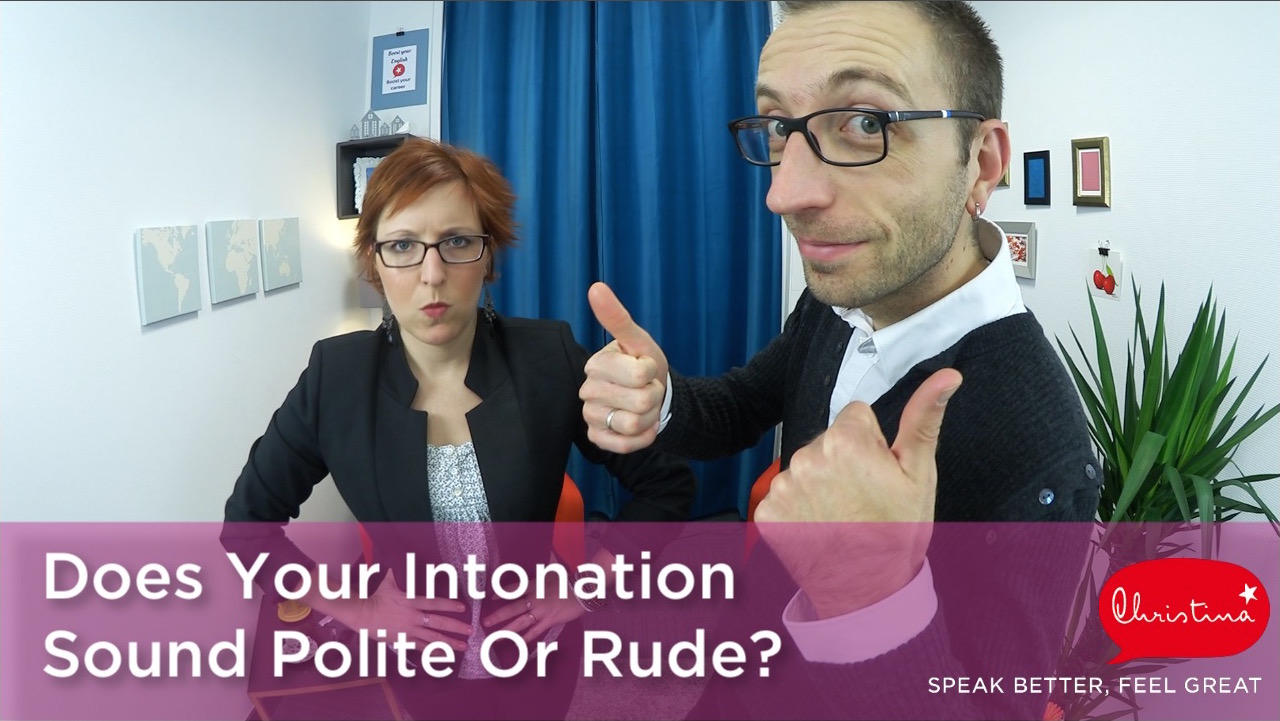
“I didn’t order that!” Sounds very abrupt and short – almost aggressive. If I said the same phrase, but changed the intonation, I can make this phrase sound less aggressive: “I didn’t order that!” (Watch the episode below to hear the difference!)
Still, there is a way to sound more polite – both in what you say and how you say it.
In the next examples pay attention to the words I say, but also to the way I say them. Try to mimic my intonation while watching the episode. Is your intonation polite or rude?
For example some polite approaches would be:
“Excuse me, sir? I’m sorry to bother you, but this isn’t what I ordered.”
“Excuse me, sir? There seems to have been a misunderstanding. I think they got the wrong order.”
Let’s imagine we’re still at the restaurant, but the waiter hasn’t brought us our food. We’ve been waiting a long time.
You’re hungry and angry which makes for a potentially dangerous combination of frustration.
We even have a word in American English for this phenomenon – and that’s “hangry.” Hangry is a relatively new word inAmerican slangthat simply combines “angry” and “hungry.” When you’re hangry, you can be irritable and difficult to deal with.
In this instance, if you’ve been waiting a long time you can say:
“Excuse me, waiter? I am so sorry to bother you, but we have somewhere to be. Could you check on our order?”
They will understand that you have been waiting too long, and you are not happy about it.
At the Hotel
Let’s imagine you have arrived at your destination after a long flight. You can’t wait to check in to your hotel in English, and then take a nap (to dream in English, perhaps!).
But there is a problem: you asked for a non-smoking room, and you smell smoke. And the bed sheets are dirty… and the view outside is a parking lot – not the beach view you were promised (and paid for) online.
At the front desk, you can say:
“Hello, I’m sorry to bother you, but I have a complaint about my room. I reserved a non-smoking room with a beach view, and the room smells like smoke, and looks over the parking lot. Do you think you can maybe do something about it?”
A few more tips…
Before we finish, here are a few more things to keep in mind…
When you’re frustrated or angry, before speaking with the customer service representative or business personnel that you’re upset with:
Try to stay calm.
Keep your voice relaxed
Pay special attention to the intonation of your words
It may help to end your complaints with a question. In this way, your complaint doesn’t sound like a command.
For example, you can say:
“How can we fix this?” “What do you recommend?”
This let’s the listener know that you want to come to a solution.
And finally, you can always ask to speak to the manager. After all, it’s the manager’s job to make sure the customer is satisfied with the service.
For example, you could say:
“I’d like to speak to a manager, please.”
Be sure to watch the episode so you get the intonation right! Wrong intonation can turn a polite complaint into a very rude one!
Now what about you?
Do you have any tips or key phrases you’ve used when complaining politely in American English? If so, please share them in the comments.
Practice speaking English, and get more vocabulary too!
And if you want to practice SPEAKING English, so you feel confident before you actually meet someone in English?
Then consider my Faster Fluency Conversation Club.
You get plenty of practice to speak English and receive feedback on mistakes or suggest ways you can speak more colloquially, so you gain fluency faster.
You can get all the details and save -40% off your 1st month of membershipby clicking on this link.
Thank you for learning with Speak English with Christina, and I’ll see you next time!
More good stuff...
Click the image to learn more


Leave a Reply

Business English lessons & tips

Improve faster and feel more confident with my free English lessons. Sign up today.
MOST RECENT EPISODES