How to increase your vocabulary in English
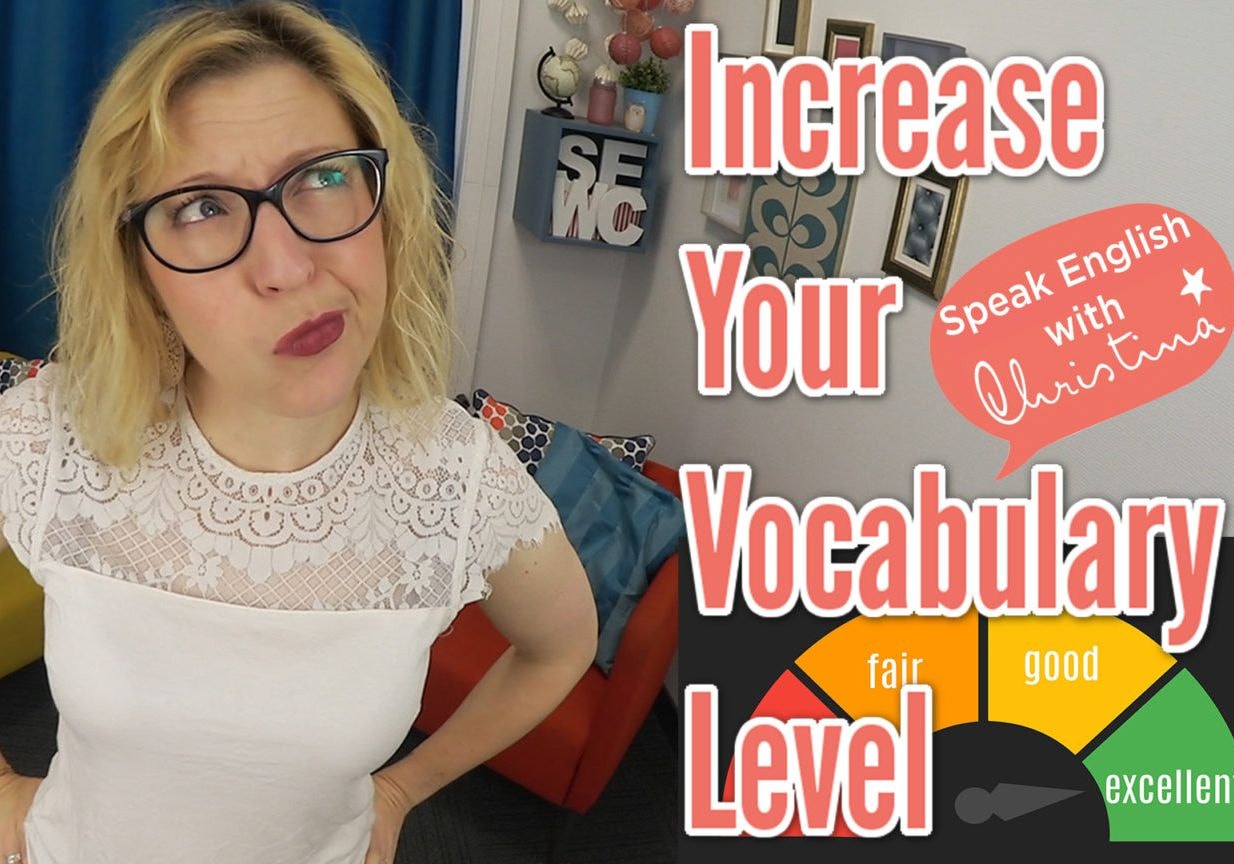
Increase your vocabulary
When you become an intermediate learner, it’s great!
You know all the basics of English language, the simple tenses… You can make sentences on your own! You can say what you mean!
Well… Mostly.
Because at some point, you also realize you’re not quite as good as you’d like. For example:
– You don’t know how to express subtle ideas clearly, or anything complicated.
– You feel like you’re talking like a child.
– You’re stuck with basic words!
That’s frustrating. And the worse thing is: it’s hard to improve, at this point!
After all, you already master all the obvious guides and vocabulary. Of course, you find new words in some books or movies, but it’s hard to remember them.
Don’t worry: there’s a way out!
Today, let’s see how you can learn advanced vocabulary in English.
Index:
1. What is advanced vocabulary?
Vocabulary is a key component to moving from beginner to intermediate and advanced levels of language proficiency.
When you’re an intermediate learner, you learned enough vocabulary so you can “get by.” This simple vocabulary is necessary! It helps you communicate what you want, with only a few words. Just like when you were younger, in school, in your own language!
But then you learned more words: that’s advanced vocabulary.
Advanced vocabulary in English is the vocabulary you need to sound like an adult – and not like a child, or like a robot! It’s advanced vocabulary that will make you communicate efficiently.
“Advanced Vocabulary” is:
- Colloquial vocabulary.
- Idioms and turns of phrase in everyday English.
- New, shorter ways to express an idea.
“Advanced Vocabulary” is not:
“Fancy” words that signal culture. They have their use, but they’re not the point of reaching an “advanced level.”
The extra mile:
When you’re currently at an intermediate level, that’s when you could especially use a coaching session. A coach can tell you exactly what you lack, what you need to improve, and how to do it in the most efficient way possible.
Before, as a beginner, you could simply follow lessons.
After, as an advanced learner, you might need practice – but a coaching session won’t get you the same “low-hanging fruits,” the easy steps you can take to improve quickly.
Click here to check out which coaching session you can take right now
(Also check out my lesson: Benefits of coaching in English)
2. Advanced Vocabulary by Theme or Interest
Learning vocabulary is easier if you’re interested in the topic. Or if you think you might use it in your life later!
Of course, as a bonus: If it’s a topic that interests you, then you’ll probably really use them at some point.
For example, if you love music, you can create a list of vocabulary with this theme. Make a table of names for musical instruments, and musical terms. What’s a “chord”? What’s a “string instrument”? What’s a “key”?… You need to know the basic terms. Or when you end up in a real conversation in English with musicians, you won’t be able to express yourself clearly. Or understand what they mean!
Or worse: you’ll use what you think is the right term, everyone will nod politely… but they won’t actually understand you.
For several conversation topics, you can already watch my previous lessons about English vocabulary. For example:
3. Advanced Vocabulary: Practice Often
Learning English is full of traps.
For example: you find a new word. You learn it. Great!
…And then the next time you want to use it, you realize you’ve forgotten it.
That’s a problem!
The solution is: practice and repetition.
People in English-speaking countries remember that vocabulary by talking to their friends and family and everybody around them. Well, you’re not growing up with English-speaking parents right now, and you probably don’t have everyday practice with English-speaking people, so you need to do it yourself.
For example, you can:
- Write down your new words on post-its, that you stick around your house. Everytime you see one, say it out loud – and then move the note somewhere else.
- Create a system for spaced repetition, with flashcards and a calendar.
- Create a system of virtual immersion – so you can practice everyday English at home!
Click here to check out my virtual immersion program.
The extra mile:
More strategic tips: How to improve spoken English
4. Advanced Vocabulary: Learn Prefixes and Suffixes in English
You can also choose to learn a lot of new words at the same time. For example, with learning prefixes (= small parts that you can add at the beginning of a word, to change it) or suffixes (= same thing, but at the end of a word.)
For example, adding “re-” at the beginning of the word often means “again” (or “back”):
- Rethink → Think again
- Redo → Do again
- Repay → Pay someone who already paid you = pay back.
And Un– gives a meaning of “remove”, “opposite,” “not.” For example:
- Unrest → not resting = not calm
- Unemployed → not employed
- Unfair, unjust → not fair, not just
- Unforgettable → Not possible to forget
So you might use “unfair” instead of “bad”, “unemployed” instead of “without a job”, “unforgettable” instead of “awesome”… This will help you switch to a more precise, advanced vocabulary!
Suffixes are useful too. For instance, adding “-er” at the end of a one-syllable word (like adjectives or adverbs) means “more”. And “-ly” transforms an adjective into an adverb!
- Faster → “more fast”
- Stronger → “more strong”
- Calmly → In a calm way
- Quietly → In a quiet way, without a sound
My gift, to help you get more advanced vocabulary: Click here to download your worksheet
5. Advanced Vocabulary: Use Your Own Language
In your everyday life, you’re already using advanced vocabulary in your own language. When you say a complex sentence in a conversation, try to translate it in English in your head. Do you know all the words you need? Check out their translation.
You might realize you need words such as :
- Obvious / Obviously → self-evident, clearly
- Actually → In fact
- Seriously
- That’s right
And many more!
However, this techniques does have its limitations. What if you think you know how to translate your sentence, but you’re wrong? How do you know if you’re translating correctly?
6. Advanced Vocabulary: English Collocations
“A collocation” is simply two words that are often together – because it sounds “right.” You could use synonyms instead, but it would sound “wrong.”
For example:
- A fast train
- Fast food
English speakers would never say “a quick train” or “quick food.” They’re synonyms, technically, but it’s not the same!
Here’s another example: the word “heavy” has many different meanings, depending on the word it’s associated with. You can have a “heavy rain” – a “heavy meal” – “heavy traffic” – “heavy smoker” – in each instance, the word “heavy” changes its meaning.
Other examples include idiomatic expressions in English, phrasal verbs like “figure out” , phrasal verbs with “up”, phrasal verbs with “get”, and expressions used in American corporate jargon.
Memorizing common collocations used in colloquial English will make a noticeable difference to your level of proficiency.
By noticing subtleties of English, you’ll sound more fluent using these words in the right context, avoiding some of the most common mistakes less experienced English learners make.
7. Advanced Vocabulary: One Last Thing
It’s worth noting that according to research, 3000 words is a good target to achieve a lower intermediate learning level. One of the big reasons why intermediate learners hit the plateau is because they no longer actively expand their vocabulary knowledge.
By expanding your vocabulary, according to your interests and needs, recognizing prefixes and suffixes that modify words, repetition of words, and memorizing collocations, you will be well on your way to pushing through the plateau and reaching an advanced level in your English studies.
Thanks so much for learning English with me!
More good stuff...
Click the image to learn more

one Comment

Rezaparsa says:
To day lessons were grateful and I realize my teacher opinion I request continue this method which in low time present many appropriate information that I understand them I inform please other parts of English like grammar and writing,reading,speaking and comprehension teach similar to day mean while we used to miss Christinarebuffet lectures I request videos increase like this lesson I for initiating can open links and videos in first time before I must at least two days struggle until opening them please help me for several weeks I really thanks

Valerie says:
Hello,
I try to open my MosaLingua apps everyday, to learn new vocabulary and to remind me the vocabulary I know already. It works.
Bye
Leave a Reply

Business English lessons & tips

Improve faster and feel more confident with my free English lessons. Sign up today.
MOST RECENT EPISODES